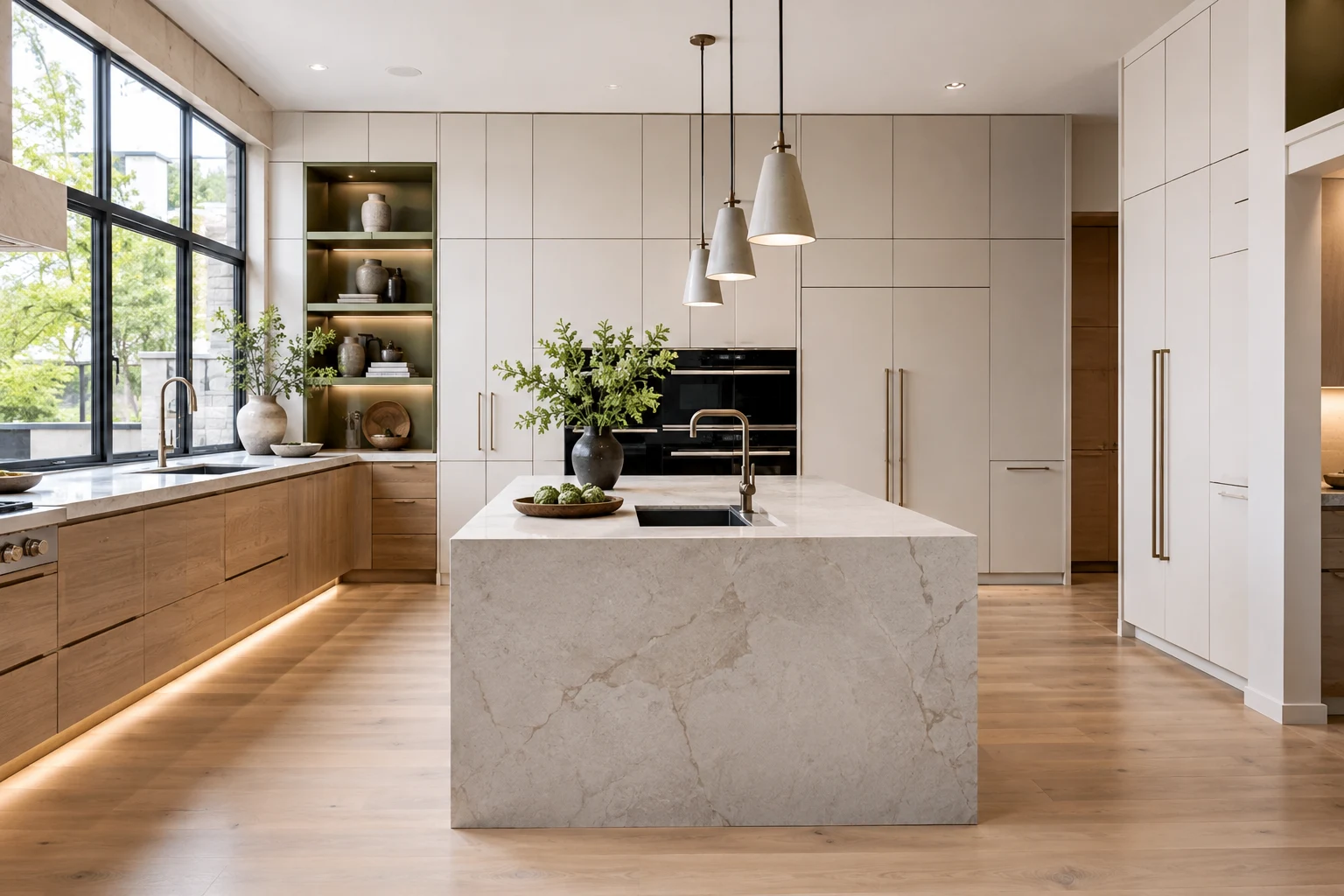
Sintered stone and quartz each have their usage boundaries. Open kitchens, islands, heavy cooking, and long-term owner-occupied projects should focus on comparing heat resistance, stain resistance, dimensions, seaming, and budget.
First, put the issue back into the whole-house process
Countertop materials have no absolute advantages or disadvantages divorced from usage scenarios. The large format and visual completeness of sintered stone, and the mature processing of quartz, all need to be comprehensively evaluated in combination with thickness, color and pattern, support, cutouts, and installation conditions.
The renovation process should first complete the whole-home customization plan, then proceed with positioning and briefing for plumbing, electrical, carpentry, tile work, and painting. At this point, conditions such as cabinet location and dimensions, light strips and power supply, switches and outlets, open shelves, drinking water equipment, kitchen appliances, door frames and trim details need to be clarified. Once cabinets enter factory production, non-conflicting on-site construction can still proceed in parallel, so advance design does not slow down the timeline but rather reduces waiting, modifications, and rework.
Evidence to verify before signing the contract
- Confirm material brand, series, thickness, and sample number
- Understand heat resistance, stain resistance, impact resistance, and cleaning limitations
- Compare slab dimensions, seaming positions, and pattern continuity
- Clarify fabrication responsibilities for sink, cooktop, and faucet cutouts
The key to verification is not about having more information but whether the information matches your unit layout, order, and city service team. The more specific the model numbers, quantities, positions, responsibilities, and acceptance methods, the less likely you are to face unexpected charges or rework due to misunderstandings later.
How design and construction connect
- For heavy cooking areas, prioritize maintenance and localized impact risks
- Island countertops require base structure and load-bearing support based on span length
- Countertop height should align with cabinetry, appliances, and user height
- Confirm backsplash, wall tiles, and window sill details before re-measuring
It is recommended to establish a project folder, storing measurement records, equipment specifications, confirmation drawings, material lists, quotes, change orders, and acceptance photos by date. Update dimensions, prices, timeline, and responsible parties with each change, and avoid replacing formal confirmations with casual chat messages. This facilitates coordination among different trades and ensures that future disputes can be traced back to the same set of facts.
How to inspect on arrival and at completion
- Verify color code, pattern, and surface defects upon delivery
- Check seam width, height difference, and caulk color coordination
- Inspect cutout edges for completeness and proper reinforcement
- After water test, check sink anchoring and surrounding seals
Acceptance is best conducted item by item by room and component, starting with hidden structures and safety conditions before examining surface appearance. Immediately mark the location of any issues found, take close-up and panoramic photos, and agree on rectification methods and re-inspection time. Do not make verbal commitments when issues remain unresolved.
allvs project recommendations
When selecting countertops, first confirm usage habits and design requirements, then compare materials. Whether you frequently use heavy cookware, need large overhanging sections, use a specific sink installation method, or how corners and seams are handled will all affect material selection and fabrication. Sintered stone and quartz come in different specifications and quality levels; durability cannot be judged by name alone. When viewing samples, ask about edge treatment, cutout requirements, seaming locations, and maintenance methods, and have the supplier clarify what conditions constitute usage limitations. Cabinet support, countertop fabrication, and on-site installation should be coordinated together to prevent well-chosen materials from being damaged by improper detailing.
When selecting countertops, allvs first asks about cooking methods and maintenance habits, then discusses aesthetics. Only by treating the countertop as part of the kitchen system can you avoid choosing materials that look good but don't work well at the details.
Each household has different property conditions and lifestyle habits. This article provides a framework for communication and verification, not a substitute for professional judgment specific to the site. Moving key decisions forward, developing detailed drawings, clarifying materials, and documenting details are more reliable paths to a stable delivery experience.